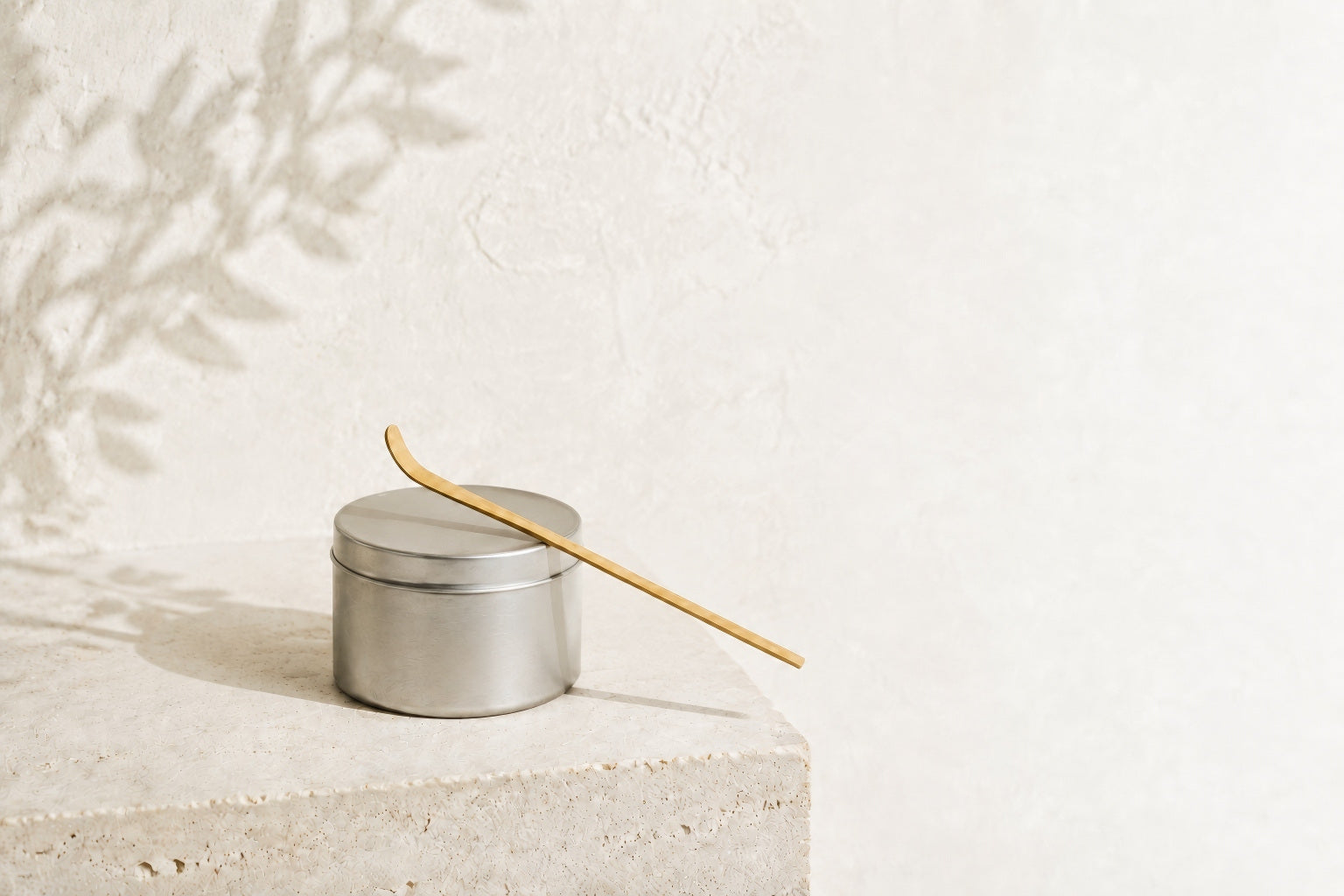
Matcha 101
What to check
before you buy
You cannot taste matcha
through a screen, so the
label has to do the work.
Look for the grade, the
cultivar, the region it was
grown in, and a date. If a tin
tells you none of those
things, you are buying blind.
Because the grade names are
not regulated, look past them
at what is actually stated: the
harvest, the cultivar, the
region, and how it was ground.
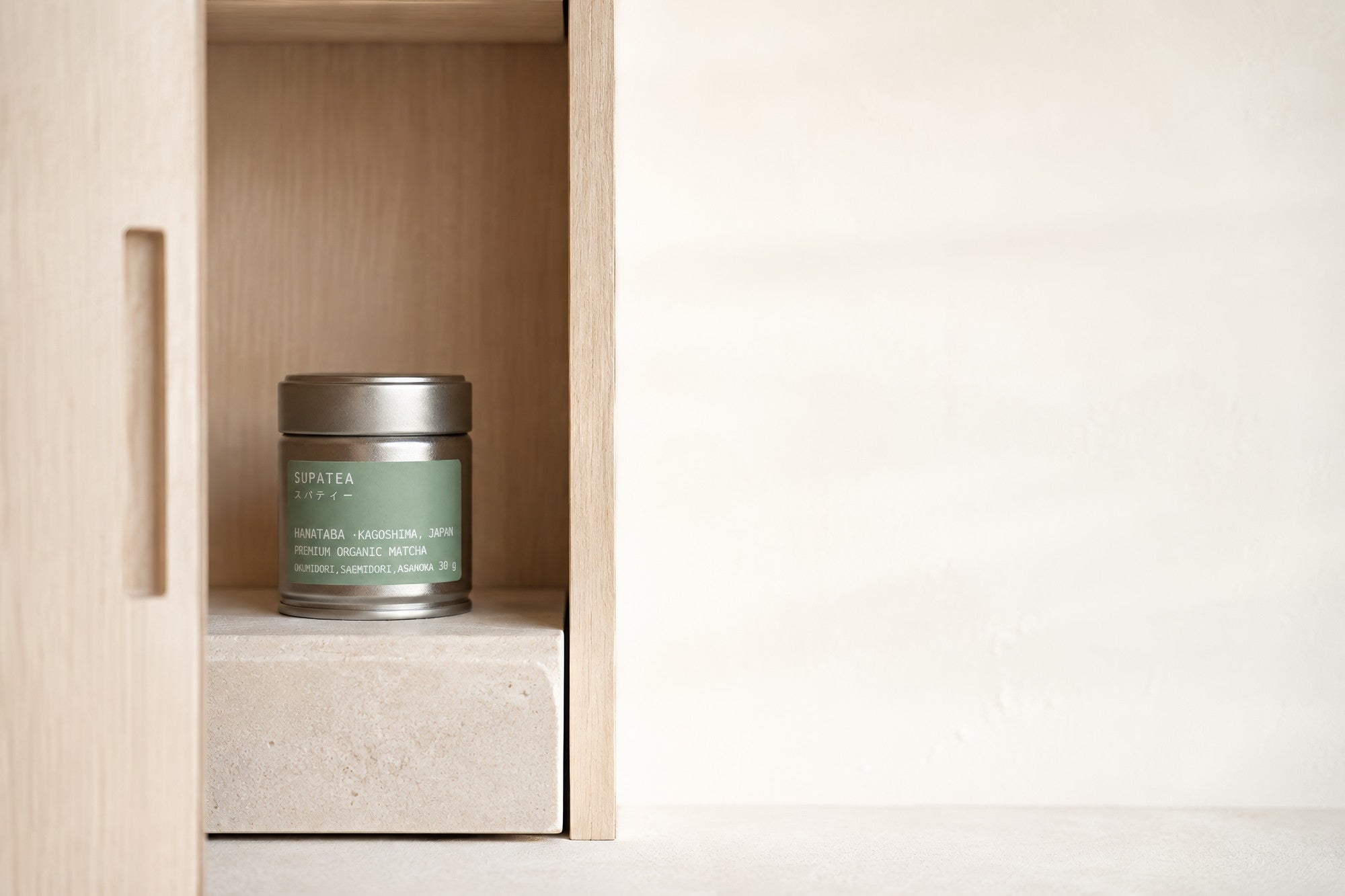
Every SUPATEA tin carries its
cultivar, where it was grown,
its lot number and its
best-before date.
How to
keep it
Matcha is a ground powder with a great deal of
surface area, and it fades. Light, heat, air and
moisture all dull it — colour first, then flavour.
Keep the tin sealed, cool, dry and out of direct light.
A cupboard is better than a benchtop next to the kettle.
Refrigerating an opened tin is usually not worth it.
Moving the powder between cold and warm air
draws condensation into it, and moisture does
more damage than a few weeks at room temperature.
Which one
to start with
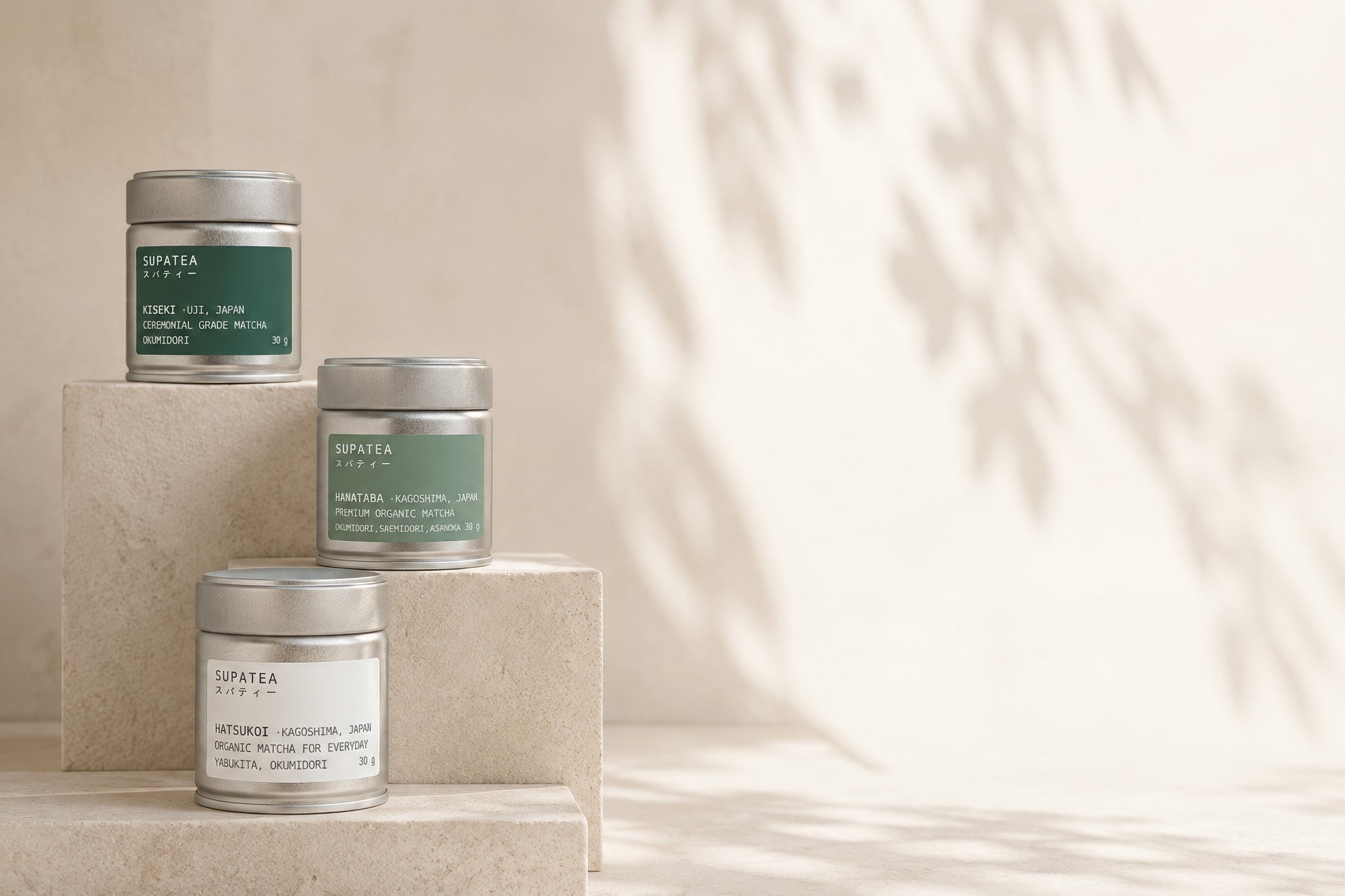
If matcha has disappointed you before, start
with HATSUKOI. It is the gentle one.
If you drink it with milk and want something
floral and sweeter, HANATABA.
If you want to taste a single cultivar from
Uji on its own, KISEKI.