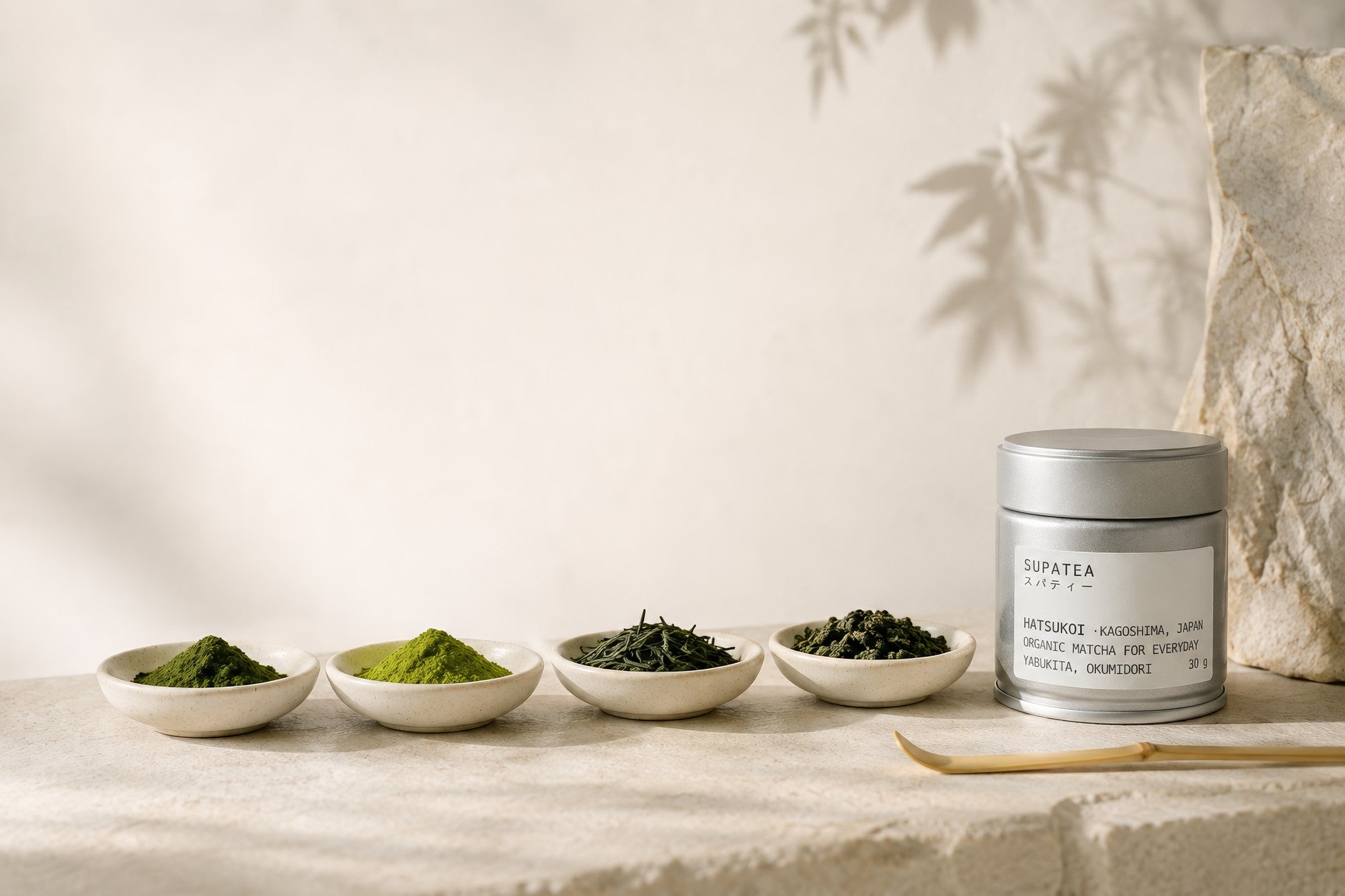
Matcha 101
Why the cultivar
is on our tins
Tea is not one plant. Like grapes or apples, it comes
in cultivars, and they taste different from each
other even when grown side by side.
Almost nobody selling matcha tells you which one you are
drinking. We print it because it is the single most useful thing
to know if you want to find what you like and buy it again.
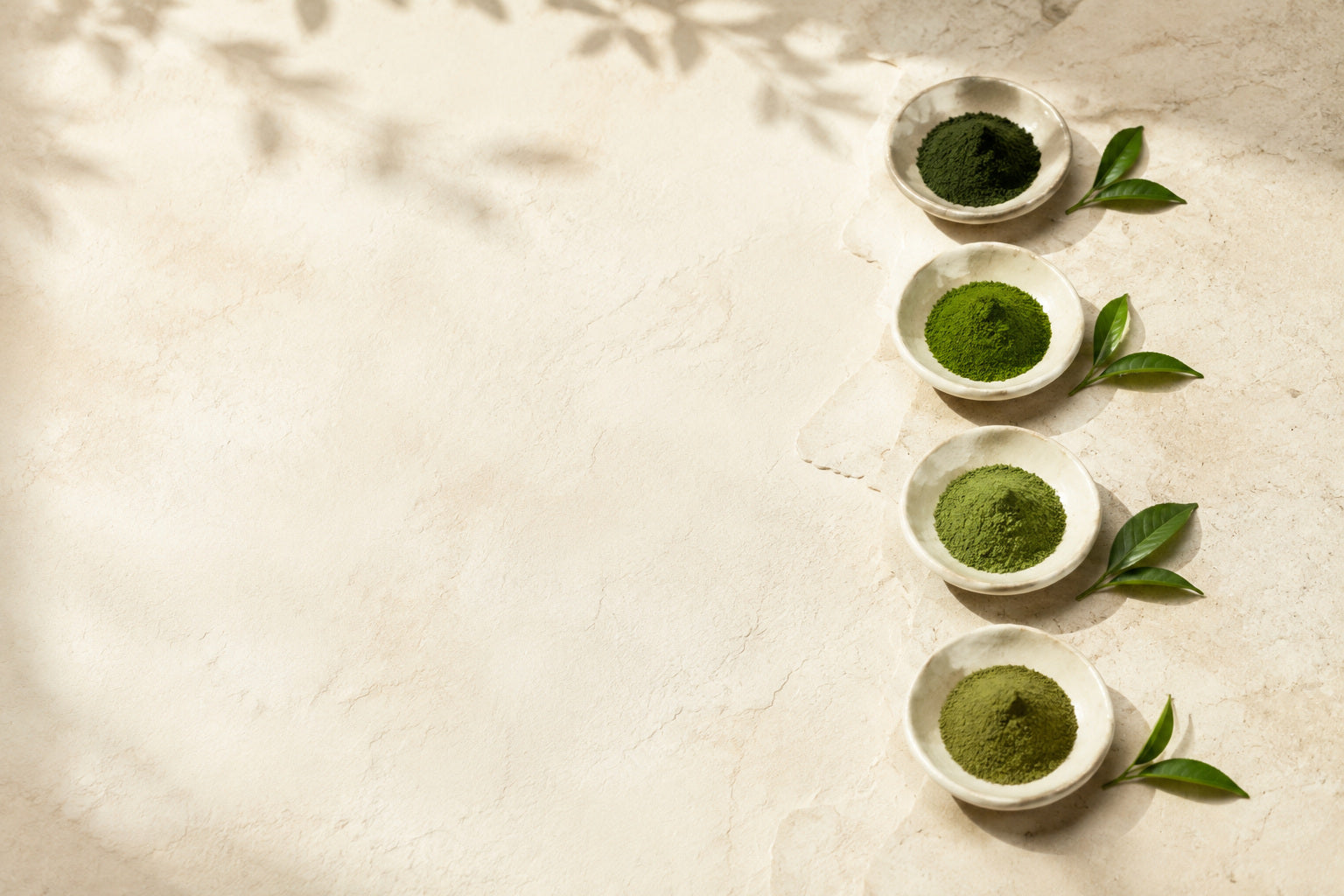
The cultivars
we use
Okumidori is late-budding and known for a deep green colour
and a mellow, rounded character. It is the backbone of what we sell.
Saemidori is prized for vivid colour and natural sweetness.
Asanoka is aromatic, and brings a floral lift to a blend.
Yabukita is the most widely planted tea cultivar in Japan —
dependable and balanced, which is why it turns up in blends
built for everyday drinking.
A single cultivar means what you taste is that one plant, with
nothing else in the tin to round off its edges. A blend means the
maker has combined cultivars deliberately, usually to build an
aroma or a balance no single plant gives on its own. Neither
approach is better than the other. They are different intentions.